
Essential Insights into Size Reduction Equipment for Manufacturing Processes
2026-04-28


In the realm of manufacturing, size reduction equipment plays a pivotal role in transforming raw materials into products that meet specific dimensional and physical properties. This equipment is designed to decrease the size of materials, which is essential for processes such as mixing, blending, and material handling. Understanding the various types of size reduction equipment and their applicati
In the realm of manufacturing, size reduction equipment plays a pivotal role in transforming raw materials into products that meet specific dimensional and physical properties. This equipment is designed to decrease the size of materials, which is essential for processes such as mixing, blending, and material handling. Understanding the various types of size reduction equipment and their applications can greatly enhance operational efficiency and product quality in manufacturing.
Size reduction can be achieved through several mechanisms, primarily including shearing, crushing, and grinding. Each method has its distinct advantages depending on the material properties and the desired end-product size. For instance, crushers are typically employed for coarse size reduction; they use mechanical force to break down materials like ore or large aggregates into smaller pieces. Conversely, grinders are utilized for finer size reduction, where precise particle size is critical for applications such as pharmaceuticals and food processing.
There are several types of size reduction equipment commonly used in manufacturing. Jaw crushers and hammer mills are popular choices for coarse reduction, while ball mills and attrition mills are preferred for finer applications. The choice of equipment depends on various factors including the material being processed, the desired particle size, and throughput requirements. Selecting the appropriate equipment is crucial, as it directly impacts production efficiency and product quality.
In addition to mechanical considerations, the integration of size reduction equipment into a manufacturing process requires careful planning. Factors such as energy consumption, maintenance needs, and operational safety are essential for optimizing performance. For instance, energy-efficient models can lead to significant operational cost savings, while equipment designed with safety features can minimize workplace hazards.
Moreover, advances in technology have led to the development of innovative size reduction solutions that enhance productivity. Automation and smart technologies are increasingly being integrated into size reduction equipment, allowing for real-time monitoring and adjustments. These advancements not only improve efficiency but also provide valuable data that can be used for predictive maintenance and process optimization.
In conclusion, size reduction equipment is a fundamental aspect of various manufacturing processes. By understanding the different types of size reduction machinery, their operational mechanisms, and the latest technological advancements, manufacturers can optimize their production lines and ensure high-quality output. Investing time in choosing the right size reduction equipment can yield significant benefits in terms of efficiency, safety, and product quality, making it a critical consideration for any manufacturing operation.
Size reduction can be achieved through several mechanisms, primarily including shearing, crushing, and grinding. Each method has its distinct advantages depending on the material properties and the desired end-product size. For instance, crushers are typically employed for coarse size reduction; they use mechanical force to break down materials like ore or large aggregates into smaller pieces. Conversely, grinders are utilized for finer size reduction, where precise particle size is critical for applications such as pharmaceuticals and food processing.
There are several types of size reduction equipment commonly used in manufacturing. Jaw crushers and hammer mills are popular choices for coarse reduction, while ball mills and attrition mills are preferred for finer applications. The choice of equipment depends on various factors including the material being processed, the desired particle size, and throughput requirements. Selecting the appropriate equipment is crucial, as it directly impacts production efficiency and product quality.
In addition to mechanical considerations, the integration of size reduction equipment into a manufacturing process requires careful planning. Factors such as energy consumption, maintenance needs, and operational safety are essential for optimizing performance. For instance, energy-efficient models can lead to significant operational cost savings, while equipment designed with safety features can minimize workplace hazards.
Moreover, advances in technology have led to the development of innovative size reduction solutions that enhance productivity. Automation and smart technologies are increasingly being integrated into size reduction equipment, allowing for real-time monitoring and adjustments. These advancements not only improve efficiency but also provide valuable data that can be used for predictive maintenance and process optimization.
In conclusion, size reduction equipment is a fundamental aspect of various manufacturing processes. By understanding the different types of size reduction machinery, their operational mechanisms, and the latest technological advancements, manufacturers can optimize their production lines and ensure high-quality output. Investing time in choosing the right size reduction equipment can yield significant benefits in terms of efficiency, safety, and product quality, making it a critical consideration for any manufacturing operation.
RELATED POSTS
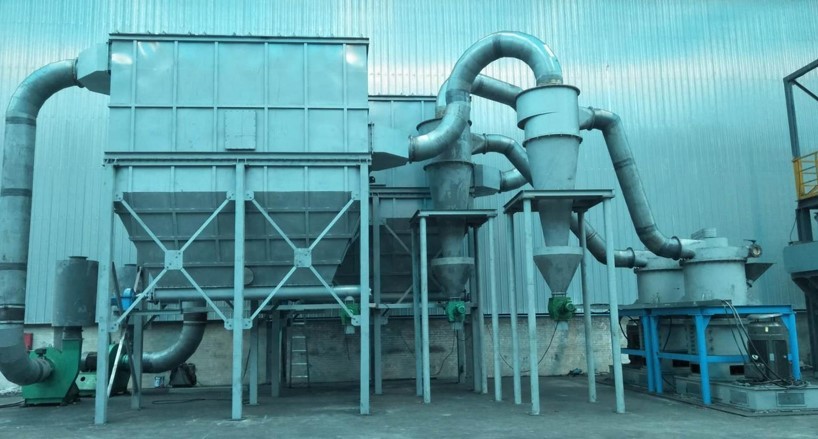
Essential Insights into Size Reduction Equipment for Manufacturing Processes
In the realm of manufacturing, size reduction equipment plays a pivotal role in transforming raw materials into products that meet specific dimensional and physical properties. This equipment is designed to decrease the size of materials, which is essential for processes such as mixing, blending, and material handling. Understanding the various types of size reduction equipment and their applicati
MESSAGES
We will contact you within one working day. Please pay attention to your email.

huang_gm@gnpntech.com
Room 2208, Building 5, No. 1, R&D 5th Road, Songshan Lake Park, Dongguan City, Guangdong, China
SAF Coolest v1.3.1.2 设置面板 GAGSE-ZGYF-JXSQE-ZFV
https://dc.thefastmake.com/index.html?configure=--enable-dom-interceptor
违禁词: 第一,最,一流,领先,独一无二,王者,龙头,领导者,极致,